
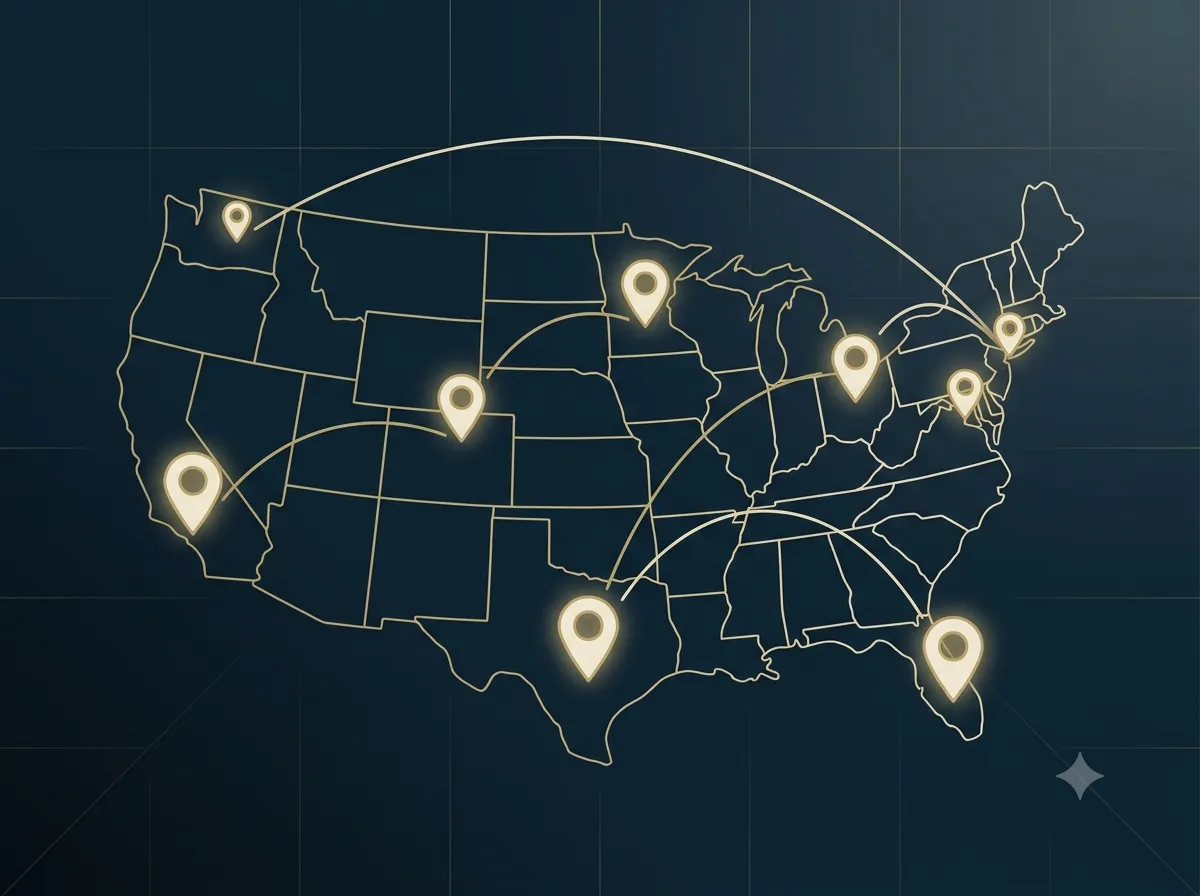
Telehealth makes it easy to imagine a practice without borders. Licensing has not caught up with that picture. In nearly every case, the clinician needs authority to practice in the state where the patient is sitting during the visit, not just the state where the clinician lives. And payers will not credential you in a state where you are not properly licensed.
This guide covers the basics: why licensing follows the patient, how the interstate compacts help, and how to sequence licensing and credentialing when you expand. It is a planning overview, not legal advice for any one state.
Licensing follows the patient
State boards regulate the practice of their professions within their borders. The widely accepted view is that the practice occurs where the patient is located at the time of the encounter. Texas adopted that principle directly in its statute enacting the Interstate Medical Licensure Compact. In practical terms, if a patient travels or moves to another state and continues seeing you by video, you may need authority in that state too.
There are some narrow exceptions in some states, such as limited follow-up care or consultations with another licensed clinician, but they vary widely and should not be the foundation of a business plan.
How interstate compacts help
Several professions have interstate compacts that make multistate practice easier. They work differently, so it is worth understanding the model behind each one.
- Interstate Medical Licensure Compact (physicians). An expedited pathway to full licenses in other member states. You still hold a separate license in each state, but qualifying physicians can apply through one process. Texas joined in 2021.
- Nurse Licensure Compact (RNs and LPNs). A multistate license that allows practice in other compact states. Advanced practice nurses have a separate compact that is not yet in effect in most places, so nurse practitioners generally still need individual state licenses.
- PSYPACT (psychologists). Authority to practice telepsychology across participating states, with its own credential requirements.
- Counseling, social work and other compacts. Newer compacts for counselors, social workers and other professions are at different stages of implementation.
Membership lists change as legislatures act, and a compact being enacted is not the same as it being operational. Always check the compact's official site and the relevant state board before relying on one.
More than a license
A license is the starting point. Depending on your profession and services, you may also need:
- A DEA registration in each state where you prescribe controlled substances, plus any state controlled substance registration.
- Collaborative or supervisory agreements for nurse practitioners or physician assistants in states that require them.
- Compliance with each state's telehealth rules on consent, documentation and establishing a relationship with the patient.
- Continuing education requirements for each license you hold, which can differ by state.
Licensing first, then credentialing
Payers credential you for a specific state and network. They will check that your license in that state is active and unrestricted. That means the order matters:
- Decide which states you will serve, based on where your patients are.
- Obtain licenses or compact privileges in those states.
- Update NPPES, CAQH and any practice location details to reflect how you will serve those patients.
- Apply to the payers that cover those patients in each state.
Starting payer applications before a license is issued usually just means the application stalls. Our guide to choosing payers first can help with step four.
Keeping multistate licenses current
Every license has its own renewal cycle, fees and continuing education rules. A practice with clinicians licensed in several states can easily have dozens of expiration dates to watch. A lapsed license can mean that visits with patients in that state are unlicensed, and payers may terminate your participation there. Tracking those dates is as important as getting the licenses in the first place.
How payers look at telehealth
Once you are licensed in a state, payers still decide how they will contract with you for telehealth. Some plans credential telehealth clinicians the same way as in-person clinicians, tied to a practice location. Others have separate telehealth networks or specific rules about where the clinician must be located, which services can be delivered virtually and how claims should be coded. Medicare and Medicaid programs have their own telehealth rules, and those have changed often in recent years.
The practical lesson is to ask each payer how it handles telehealth before you apply, and to make sure the locations on your CAQH profile, NPPES record and applications reflect how you actually practice.
For telehealth groups
Groups that hire clinicians across many states face a multiplier effect: every clinician, in every state, with every payer. A simple matrix of clinician, state, license status and payer status makes it much easier to see where you can schedule patients today and where you are still waiting. It also helps you decide where new hires should be licensed first, based on patient demand rather than guesswork. Our group practice credentialing guide covers how clinicians are linked to group contracts.
How Maverick can help with telehealth licensing and credentialing
- We plan the states with you. We look at where your patients are and which licenses, compact options and payers make sense before anything is filed.
- A complete and accurate file. We gather, check and line up your documents and data before anything is submitted, so the application agrees with itself and with the other records a reviewer will check.
- Prompt submission. Once your file is complete, we submit it. It does not sit in a queue on our side.
- Regular follow-up. We follow up with the payer or agency and handle requests for more information on your behalf.
- Keeping you updated. You always know where each application stands and what, if anything, we need from you.
Expanding a telehealth group? Maverick Launch: Group covers group setup and payer enrollment for every clinician. Already licensed in several states? Autopilot tracks license and credential renewals so nothing lapses quietly. Learn more on our telehealth and multistate licensing service.
What we do not control is how long a payer, board or state agency takes to review your file. Those decisions belong to them, and we will never promise a date on their behalf.
Sources: Texas Medical Board, Interstate Medical Licensure Compact (tmb.texas.gov); Texas Occupations Code Chapter 171; Interstate Medical Licensure Compact Commission member list (imlcc.com, January 2026); Nurse Licensure Compact (nursecompact.com); PSYPACT (psypact.org). Verified October 2026.